Run AI coding agents in isolated Docker containers — your machine stays yours.
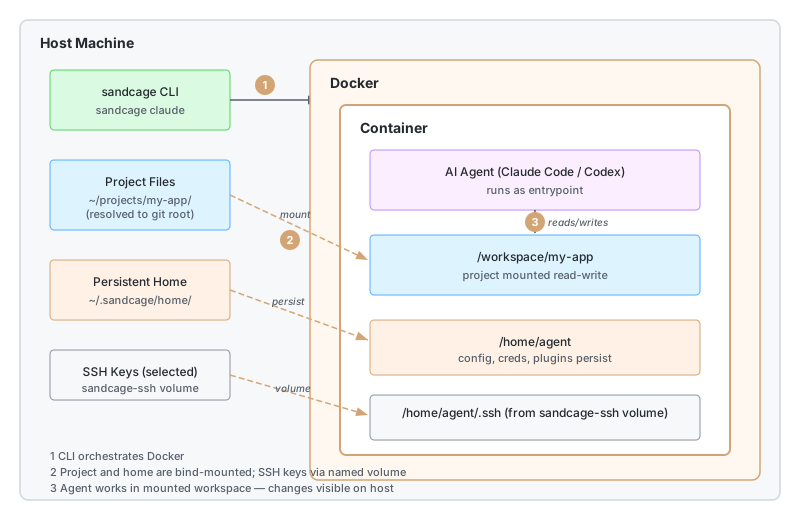
--- > [!CAUTION] > **Unreleased Software** > > This project is under active development and **not yet released**. APIs, configuration formats, and behavior may change without notice. Please **do not use without contacting the author** about the current state of the project. > [!WARNING] > **Development Tool Only** > > Sandcage is designed for **local development use**. Do **not** use it in CI pipelines or production environments — container isolation is not yet hardened for those contexts. --- ## Why Sandcage? AI coding agents need broad access to do their work: shell, filesystem, network. Letting them run directly on your machine means they share your credentials, your session history, and your entire environment. Sandcage gives each agent its own container with the tools it needs. Your project is mounted in, changes are visible on the host, but the agent never touches your shell config, your SSH agent, or anything else outside the sandbox. Multiple agents can run side by side. A persistent home directory means config and credentials survive between sessions, so you are not re-authenticating every time. ## Quick Start **Prerequisites:** Docker (running) and a Rust toolchain (cargo). ```bash # Install cargo install --git https://github.com/dirigence/sandcage # Build the container image sandcage build # Run Claude Code in the current project sandcage claude ``` That's it. Sandcage resolves your project to its git root, mounts it into the container, and drops you into the agent. ## Usage ``` sandcage claude # Claude Code agent sandcage codex # Codex agent sandcage gemini # Gemini CLI agent sandcage shell # interactive shell, same environment sandcage claude -p ~/project # run in a specific project sandcage claude -- --resume # forward args to the agent sandcage claude --shell # shell for debugging sandcage build # build/rebuild container image sandcage init # generate .sandcage.yml for your project sandcage setup ssh # configure SSH key access for containers ``` ## How It Works